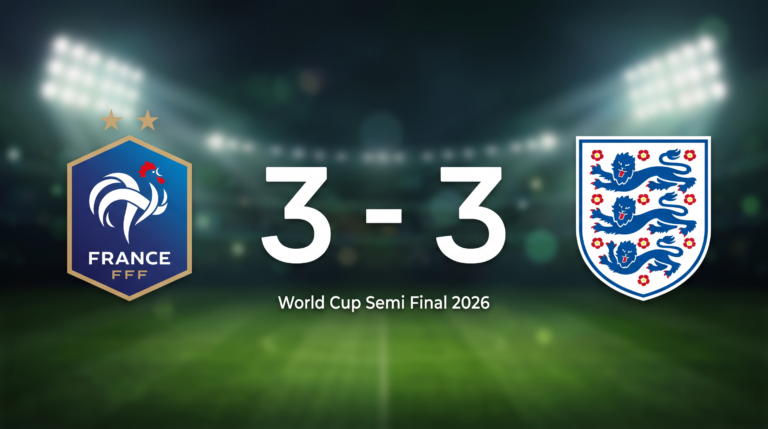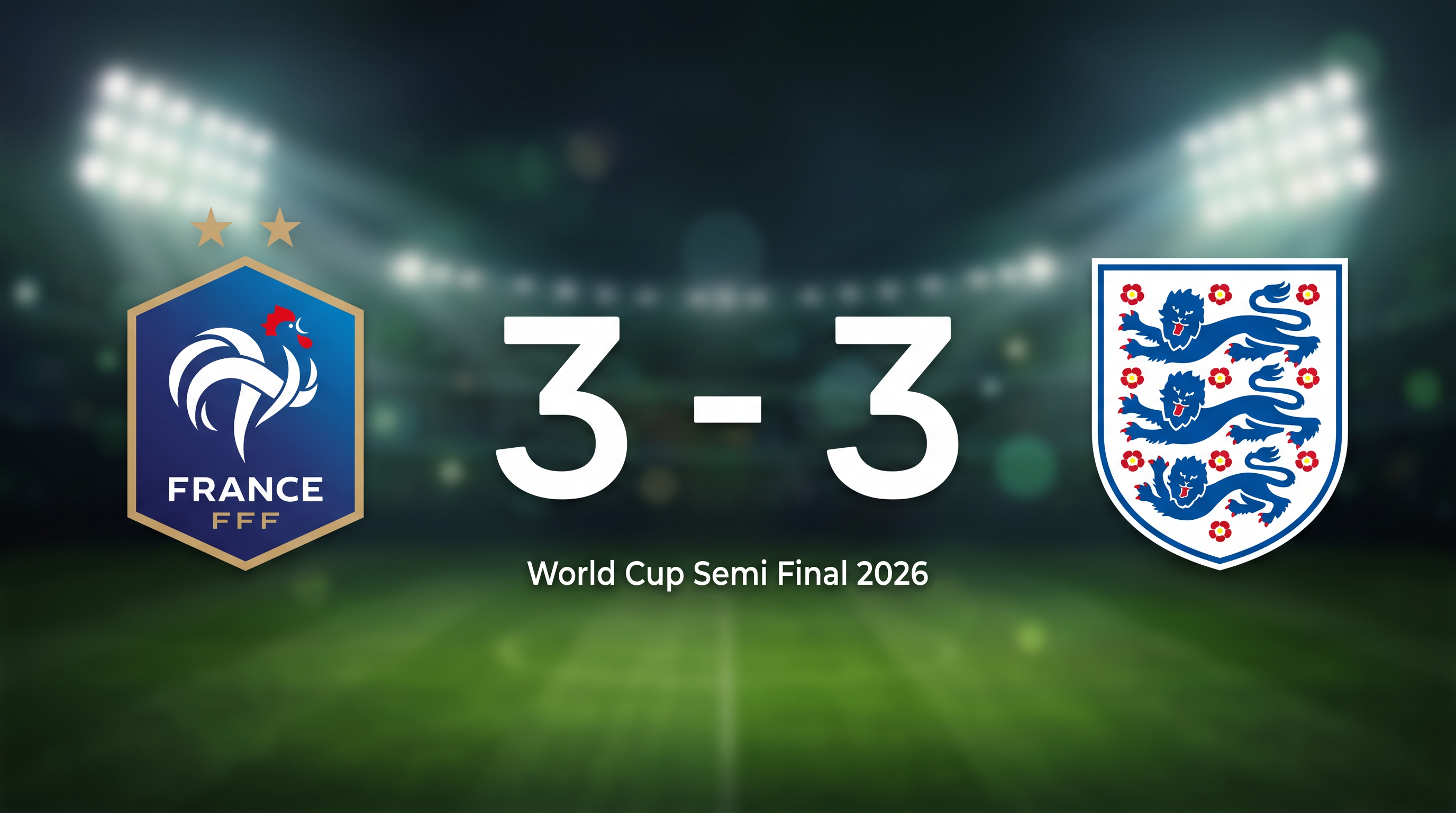
France and Angleterre served up a World Cup Semi Final 2026 that refused to settle, finishing 3-3 in a recap packed with momentum swings and relentless attacking intent. The scoreline told the story immediately: this wasn’t a cautious semi-final where one goal decided everything—it was a high-stakes battle where both teams kept answering, turning every setback into a new chance to level the score. With the final score reading 3-3, the winner on the night was ultimately determined by what happened after the goals, but the match itself will be remembered for how quickly the game changed and how often the next goal felt inevitable.
From the soccer statistics perspective, a 3-3 score is the clearest sign of a match where chances were plentiful and conversion was ruthless. In a recap like this, the numbers usually point to sustained pressure, frequent entries into dangerous areas, and a pattern of attacks that forced the opposition to defend in waves. When both teams combine to produce six goals, it typically means shots were coming from multiple angles, transitions were sharp, and defensive recoveries weren’t enough to stop the next wave. France vs Angleterre would have been defined by the rhythm of the score: each time one side edged ahead, the other responded quickly enough to keep the match open, ensuring the score never became comfortable for either team.
As for the tactical takeaway, a 3-3 semi-final score often reflects two things at once: attacking quality and defensive vulnerability. The recap will focus on how both teams managed to create enough high-value moments to keep the scoreboard moving, while also showing that neither side could fully control the game’s tempo once the first goal arrived. In soccer statistics terms, the score suggests a match where the attacking plan won more duels than the defensive plan, and where the final score became a direct product of execution under pressure. France and Angleterre leave the World Cup Semi Final 2026 with a dramatic score and a recap that will be replayed for the sheer volatility of the score.
About the Author